
ACP Cladding for Buildings in India: Types, Costs & Installation Guide
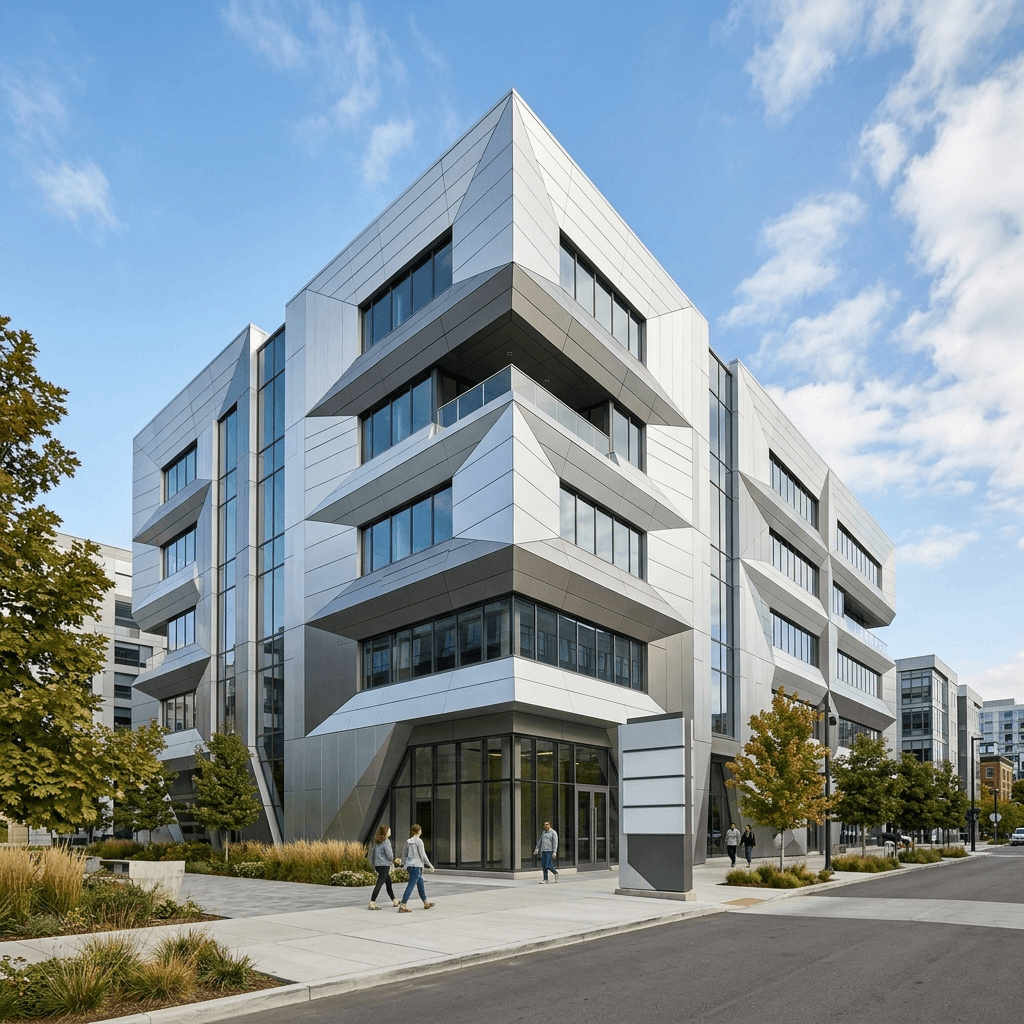
## What is ACP Cladding?
Aluminium Composite Panel (ACP) cladding is one of the most popular exterior facade solutions for commercial buildings, shopping malls, hospitals, office complexes, and residential high-rises in India. An ACP panel consists of two thin aluminium sheets bonded to a core material — typically polyethylene or fire-retardant mineral core.
Types of ACP Panels
1. Polyethylene Core ACP (PE Core) - Standard grade with polyethylene core - Lighter weight, lower cost - **Not recommended for high-rise buildings or fire-sensitive applications** - Suitable for internal cladding, signage, and low-rise structures
2. Fire Retardant ACP (FR Core) - Contains mineral core with fire-retardant properties - Classified as B1 or A2 fire rating depending on core composition - **Mandatory for buildings above 15 metres (G+4 and above) as per NBC 2016** - Preferred choice for hospitals, schools, and commercial complexes
3. A2 Non-Combustible Core ACP - Highest fire safety rating - Aluminium honeycomb or mineral core with near-zero combustibility - Used in airports, government buildings, and premium high-rise projects - Highest cost but maximum safety compliance
ACP Cladding Costs in India (2025-26)
Material and installation costs vary by panel brand, thickness, and project complexity:
| Type | Panel Cost (per sqm) | Installed Cost (per sqm) | |------|---------------------|--------------------------| | PE Core (standard) | ₹600–₹900 | ₹1,200–₹1,800 | | FR Core (fire retardant) | ₹900–₹1,400 | ₹1,800–₹2,800 | | A2 Non-combustible | ₹1,800–₹3,000 | ₹3,500–₹5,500 |
*Costs are indicative and depend on building height, design complexity, and site conditions.*
The ACP Installation Process
Professional ACP cladding installation involves several critical steps:
1. **Structural survey**: Assess building facade, existing wall condition, and load-bearing capacity 2. **Engineering design**: Prepare wind load calculations and subframe design drawings 3. **Fabrication**: ACP panels are cut, shaped, and folded in a workshop 4. **Subframe installation**: Aluminium or MS angle subframe is fixed to the building structure 5. **Panel installation**: Fabricated panels are fixed to the subframe with appropriate fixings 6. **Sealing & finishing**: All joints are sealed with neutral-cure silicone sealant 7. **Quality inspection**: Check for level, plumb, joint consistency, and watertightness
Fire Safety Regulations in India
Following the Surat fire incident in 2019, Indian building codes have been significantly tightened. The National Building Code (NBC) 2016 and revised BIS standards now mandate:
- FR or A2 core ACP for all external cladding above 15 metres
- Third-party fire testing certification (BS EN 13501-1 or equivalent)
- Structural engineer sign-off for cladding systems
Choosing the Right ACP Facade Contractor
When selecting an ACP cladding contractor in India, verify:
- **Technical capability**: Do they have in-house fabrication and structural engineering?
- **Material sourcing**: Are they using certified, tested ACP brands?
- **Fire compliance**: Can they provide fire test certificates for the materials?
- **Past projects**: Ask for reference buildings you can visit
EKOSYS Facade has executed ACP cladding projects for commercial complexes, hospitals, and high-rise residential towers across Bihar and Eastern India, using only FR and A2 grade panels with full compliance certification.
Plan Your Project with EKOSYS Engineers
Get direct advice, site assessments, and accurate project proposals.
Related Engineering Insights
Complete Guide to Rooftop Solar Installation in Bihar
Everything you need to know about installing rooftop solar panels in Bihar — from government subsidies and costs to choosing the right EPC company and understanding net metering.
Facade EngineeringCurtain Wall vs Structural Glazing: A Complete Comparison
Understanding the differences between curtain wall systems and structural glazing — their applications, performance characteristics, costs, and which facade solution is right for your building project.